
"the most suitable"
20000 article(s) found
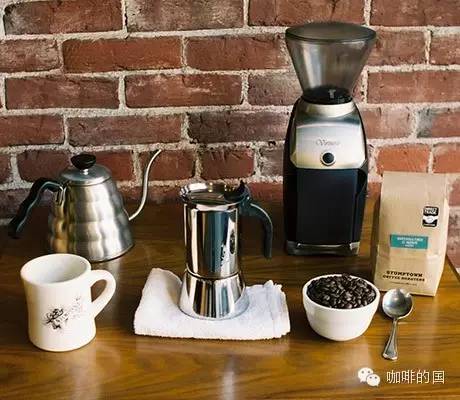
Deep-roasted coffee beans suitable for espresso Cameroon Burundi National Coffee Supervision Agency
Burundian coffee with strong fragrance and soft taste from war-torn areas. Burundi has the most diverse and successful coffee industry in the world, and has its own characteristics. Coffee in this country was introduced by Belgian colonists in 1930 and is now grown only on small farms. Unfortunately, many of these farms are on the border with war-torn Rwanda.

The roasting of Yega Sidamo Coffee in English
Yirgacheffe coffee raw bean is one of the most distinctive coffee in the world, rare and expensive, produced in the highlands of Ethiopia's sidamo province (4000 feet above sea level). It is an outstanding representative of washed coffee in Africa, with unique citrus and lemon fruit aromas, jasmine aromas, moderate roasting and soft acidity, deep roasting.
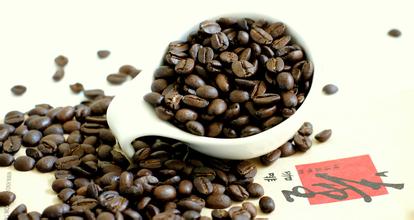
Description of roasting degree and Flavor of Coffee from different producing areas
Description of roasting degree and flavor of coffee from different areas Barahona is a place name in southern Dominica where high-quality coffee beans are produced. Beans are large beans with high maturity and balanced water content. The taste is well balanced and the palate is mild and smooth. The sour taste is not as high as Panamanian coffee beans, but it has mellow thickness. It's hard to buy pure raw beans. Maybe it's because of the market circulation.

Latin American Coffee Bean Characteristics Latin American Coffee Flavors
Latin America In 1721, Gabriel Mathieu de Clieu, a French naval officer, took the first coffee sapling from Africa to Martinique in Latin America. All this is the origin of coffee cultivation in Latin America. Because France was under Bourbon rule at that time, Latin America was planted

Latin American coffee growing region
Following Cafe Review (official Wechat account vdailycom) found that the Beautiful Cafe opened a small shop of its own in Latin America (Latin America). In 1721, French naval officer Gabriel Mathieu de Clieu went through hardships and obstacles to bring the first coffee sapling from Africa to Martinique in Latin America, all of which was grown in Latin America.

The grinding method of coffee beans is the novice coffee suitable for the Q test?
Coffee grinding in the Middle East, people still use the method of mashing beans into particles of different sizes, but when most people have gradually used bean grinders, Bella-Shavalin personally made an experiment on whether it is better to mash or grind. For public trust, and at the same time invited gourmet watchers to taste the two kinds of coffee, in the end, everyone thought that the mashed coffee powder was better.

A brief introduction to the Market Price of Latin American Fine Coffee Bean varieties with thick sweetness
El Salvador (El Salvador) aroma 4 minutes brightness 4.5 minutes mellow 3 points flavor 4.5 points aftertaste 4.5 points suitable for baking degree: if City/Full city city has a preference for heavy flavor, you can bake it a little deeper. Most people think of El Salvador as a place with frequent wars, but it is true that years of civil war have made El Salvador's coffee beans
Latin American coffee introduction to coffee producing areas
Latin America (Latin America) in 1721 French naval officer de Klee (Gabriel Mathieu de Clieu) experienced difficulties and obstacles to bring the first coffee sapling from Africa to the Latin American island of Martinique, which was the origin of coffee cultivation in Latin America. Because at that time, France was under the reign of the Bourbon dynasty, and what was grown in Latin America

Introduction to the blending of Italian Coffee which coffee varieties are more suitable for blending
In 1870, Joel, a grocery store salesman from Kentucky and the founder of Maxwell, felt that the coffee did not meet his requirements, so he began to try to mix different coffee beans. When he came up with a taste to his satisfaction, he took it to the prestigious Maxwell Hotel in Tennessee. This is a special company with a tradition of hospitality in the American South.
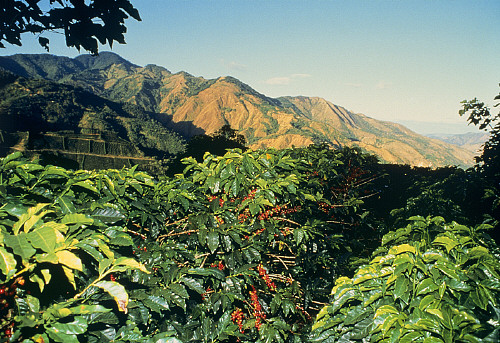
Introduction of boutique coffee producing area in Latin America
Latin America (Latin America) in 1721 French naval officer de Klee (Gabriel Mathieu de Clieu) experienced difficulties and obstacles to bring the first coffee sapling from Africa to the Latin American island of Martinique, which was the origin of coffee cultivation in Latin America. Because at that time, France was under the reign of the Bourbon dynasty, and what was grown in Latin America
What is the most suitable roasting degree for Hawaiian kona coffee? How do you drink Hawaiian Kona coffee?
Professional coffee knowledge exchange more information about coffee beans please follow the coffee workshop (Wechat official account cafe_style) Kona coffee is produced in Hawaii. A rare species that can only be planted on volcanic slopes. Taste strong, mellow, and slightly with a wine aroma, moderate sour taste, very special flavor. As the output is decreasing, the price is catching up with Blue Mountain Coffee. Kona coffee beans are produced in Charlotte.

Introduction of boutique coffee beans Latin American coffee
Latin America (Latin America) in 1721 French naval officer de Klee (Gabriel Mathieu de Clieu) experienced difficulties and obstacles to bring the first coffee sapling from Africa to the Latin American island of Martinique, which was the origin of coffee cultivation in Latin America. Because at that time, France was under the reign of the Bourbon dynasty, and Elaraby was grown in Latin America.

Latin American coffee beans characteristics Coffee beans import sour Chinese coffee net
Latin America In 1721, Gabriel Mathieu de Clieu, a French naval officer, took the first coffee sapling from Africa to Martinique in Latin America, which is the origin of coffee cultivation in Latin America. Because France was under Bourbon rule at the time, Arabi cultivated in Latin America
Coffee Common sense Latin American (Latin America) Coffee and roasting
In 1721, French naval officer Gabriel Mathieu de Clieu went through difficulties and obstacles to bring the first coffee sapling from Africa to the Latin American island of Martinique, which was the origin of coffee cultivation in Latin America. Because France was under the Bourbon dynasty at that time, there was another time for Arabica coffee grown in Latin America.

The origin of coffee beans introduces the origin of coffee beans
Colombia (South America) in 2002, the planting area of Colombian coffee was 775000 hectares and the production area was 613000 hectares. Colombian coffee is Arabica soft coffee. Colombia is one of the most important coffee exporters in the world. According to the statistics of the International Coffee Organization, Colombian coffee exports accounted for an average of 17% of the world's total coffee exports in 1991 and 1996, second only to

This paper introduces the fine beans which are most suitable for honey treatment among the varieties of coffee beans.
In the process of washing, the peel and pulp of the fruit are treated with a special desizing machine and the coffee beans are peeled off. The coffee beans then enter the fermentation tank for fermentation treatment so that the mucous membrane is no longer sticky. The sugars in the mucous membrane are decomposed during fermentation. Depending on the fermentation method, the fermentation time is usually 12 hours to 6 days (some growers use the watering system to ferment coffee beans. This kind of square

Characteristics of Latin American coffee beans Latin American coffee flavor
Latin America (Latin America) in 1721 French naval officer de Klee (Gabriel Mathieu de Clieu) experienced difficulties and obstacles to bring the first coffee sapling from Africa to the Latin American island of Martinique, which was the origin of coffee cultivation in Latin America. Because at that time, France was under the reign of the Bourbon dynasty, and what was grown in Latin America

Characteristics of Latin American coffee beans Latin American coffee flavor
Latin America (Latin America) in 1721 French naval officer de Klee (Gabriel Mathieu de Clieu) experienced difficulties and obstacles to bring the first coffee sapling from Africa to the Latin American island of Martinique, which was the origin of coffee cultivation in Latin America. Because at that time, France was under the reign of the Bourbon dynasty, and what was grown in Latin America

Characteristics of Latin American coffee beans Latin American coffee flavor
Latin America (Latin America) in 1721 French naval officer de Klee (Gabriel Mathieu de Clieu) experienced difficulties and obstacles to bring the first coffee sapling from Africa to the Latin American island of Martinique, which was the origin of coffee cultivation in Latin America. Because at that time, France was under the reign of the Bourbon dynasty, and what was grown in Latin America

Characteristics of Latin American coffee beans Latin American coffee flavor
Latin America (Latin America) in 1721 French naval officer de Klee (Gabriel Mathieu de Clieu) experienced difficulties and obstacles to bring the first coffee sapling from Africa to the Latin American island of Martinique, which was the origin of coffee cultivation in Latin America. Because at that time, France was under the reign of the Bourbon dynasty, and what was grown in Latin America